
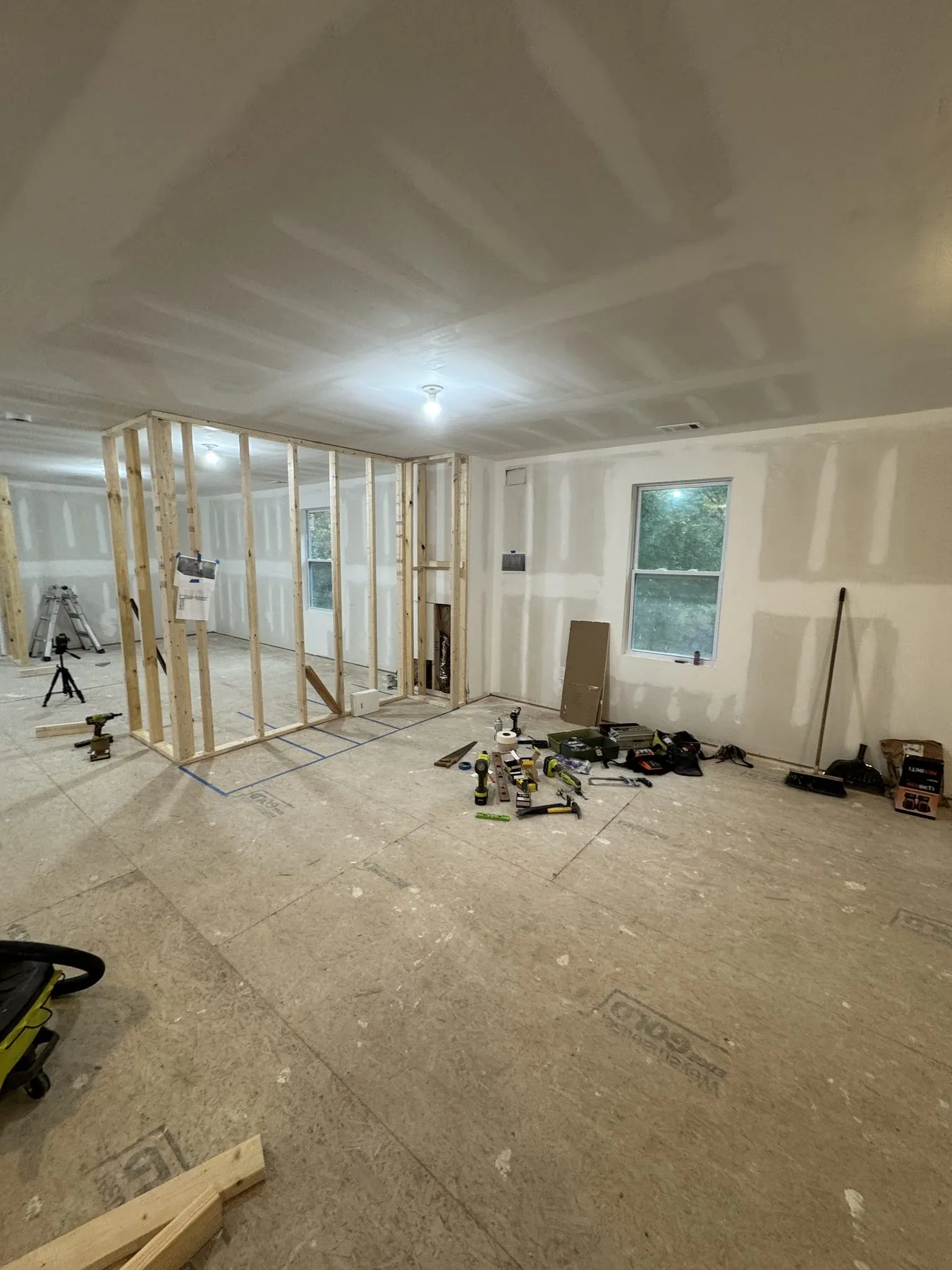
The short answer for Georgia: swapping finishes needs no permit; moving systems does. New cabinets, counters, backsplash and flooring in the same layout are cosmetic. Relocating plumbing or gas, adding or moving circuits, and structural changes trigger permits — and the details vary by city and county, which is why the honest version of this guide includes the words “check your jurisdiction.”
What is generally exempt, and what is not?
| Generally NO permit (cosmetic) | Generally YES permit |
|---|---|
| Cabinet replacement, same layout | Moving sink, gas or drain lines |
| Countertops, backsplash, flooring | New or relocated electrical circuits |
| Paint and trim | Removing or opening walls (structural) |
| Faucet swap in place | Water heater replacement |
| Light fixture swap in place | Major service panel work |
Georgia remodeling guides like GA Home Remodeling’s permit overview draw the same line: cosmetic yes-list, systems no-list. The gray zone is the wall — a pass-through between kitchen and living room can be structural or not, and nobody knows until the wall is opened or the plans are reviewed.
Why city and county both matter here
North Atlanta remodels cross jurisdictions constantly: Roswell issues its own permits through its Community Development department, Alpharetta has its own process, and unincorporated Fulton and Cobb run theirs. Same project, different desk, sometimes different paperwork. This is plumbing-grade boring — and exactly the kind of thing a local remodeler carries in their head so you do not have to. Our quotes flag permit items line by line, the same itemized-quote rule we apply to everything else.
The question behind the question: why bother?
Because unpermitted work is a deferred bill. It surfaces when you sell — disclosure forms, buyer inspections, lender questions — and it can stall a closing over work that would have passed inspection easily when the walls were open. Permits also buy you an independent second set of eyes on gas, electrical and structure, which is not a bureaucratic luxury in a room that contains fire, water and your family at breakfast.
A remodel that stays in the cosmetic lane — new boxes, counters, tile, same layout — usually needs no permit at all, which is one more argument for exhausting layout-neutral improvements before opening walls.
What we’d tell a friend
Ask every bidder one question: which parts of my project need permits, and who pulls them? A specific answer means they have done this in your city before; a wave of the hand means you are the permit department. When we quote your kitchen, permit items are named in writing — and if the answer is “none needed, it is all cosmetic,” you will have that in writing too.